
Corporate Catering for Large Diplomatic Events
When the guest list includes dignitaries, delegations, and officials from around the world, the food is only the visible tip of the operation. Corporate catering for large events at this level is really an exercise in coordination: cultural awareness, formal service, security, discretion, dietary planning, and protocol all have to align before a single tray leaves the kitchen. Diplomatic receptions raise the stakes because small missteps carry outsized weight in formal international settings. Here is a look behind the scenes at how an experienced hospitality team approaches these gatherings, and what corporate and institutional planners can learn from the way they are run.
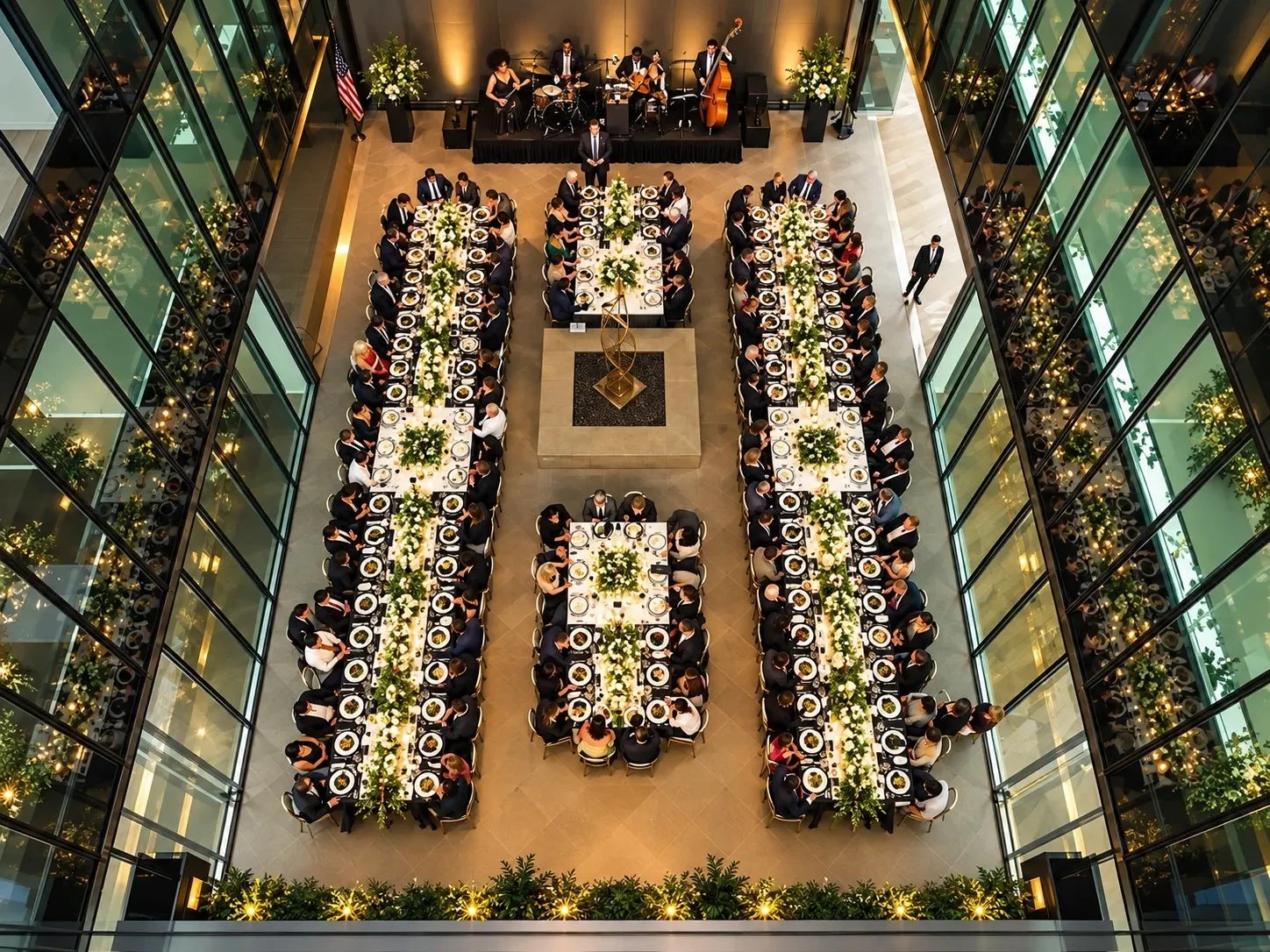
Inside International Consulate and Diplomatic Receptions
Large formal events take many shapes: national-day celebrations, cultural observances, business delegations, formal dinners, awards evenings, and international networking receptions. What they share is a combination of scale and formality that ordinary corporate catering rarely demands. Guests may number in the hundreds, arrive on a precise schedule, speak many languages, and expect a level of ceremony that shapes every hospitality decision.
Because these events are often built around a program, remarks, introductions, and formal moments, the catering has to serve the occasion, not just the guests. That reframing, from feeding a room to supporting a ceremony, is where planning begins.
Building the Hospitality Plan From the Ground Up
The strongest Los Angeles catering company partners approach a large formal event by mapping the entire experience before touching the menu. That plan spans culinary production, staffing, setup, beverage service, rentals, guest flow, and service timing, all coordinated with the venue and, when relevant, the client's security and protocol teams.
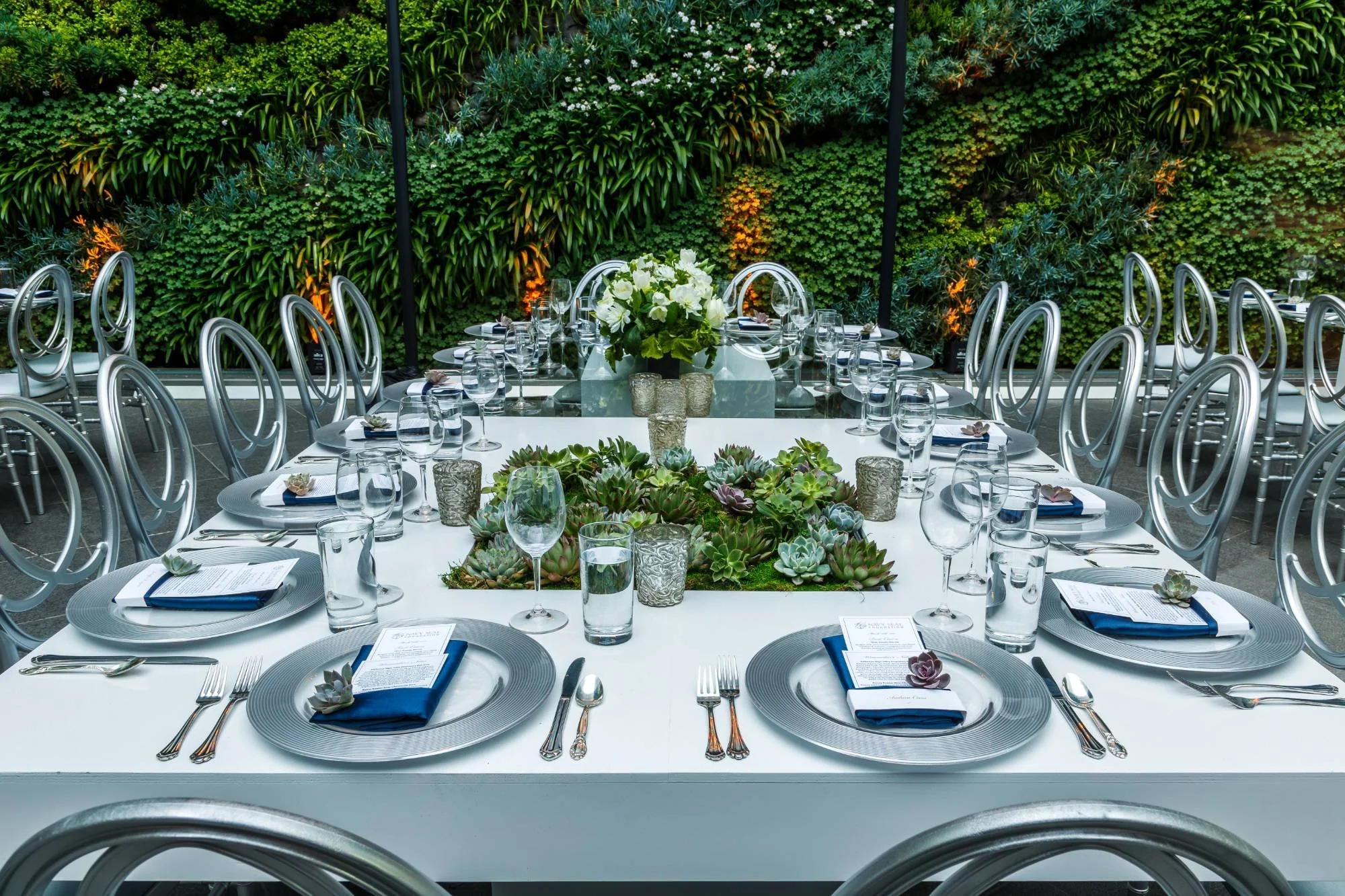
For a high-stakes reception, the plan is documented in detail and rehearsed, because the margin for improvisation is small. Every course, transition, and ceremonial pause is accounted for in advance. Planning a large corporate or diplomatic event? The depth of that upfront planning is the clearest predictor of how calm the night will feel.
Respecting Traditions Without Making Assumptions
Cultural awareness is central to diplomatic hospitality, and the key is to research and ask rather than assume. Before developing a menu or service plan, an experienced team learns about the guests' expectations, dining customs, and any ceremonial or religious considerations, working closely with the client rather than relying on generalizations. Cultures are not monoliths, and thoughtful caterers treat every event as its own conversation. That collaborative approach shapes decisions large and small: how and
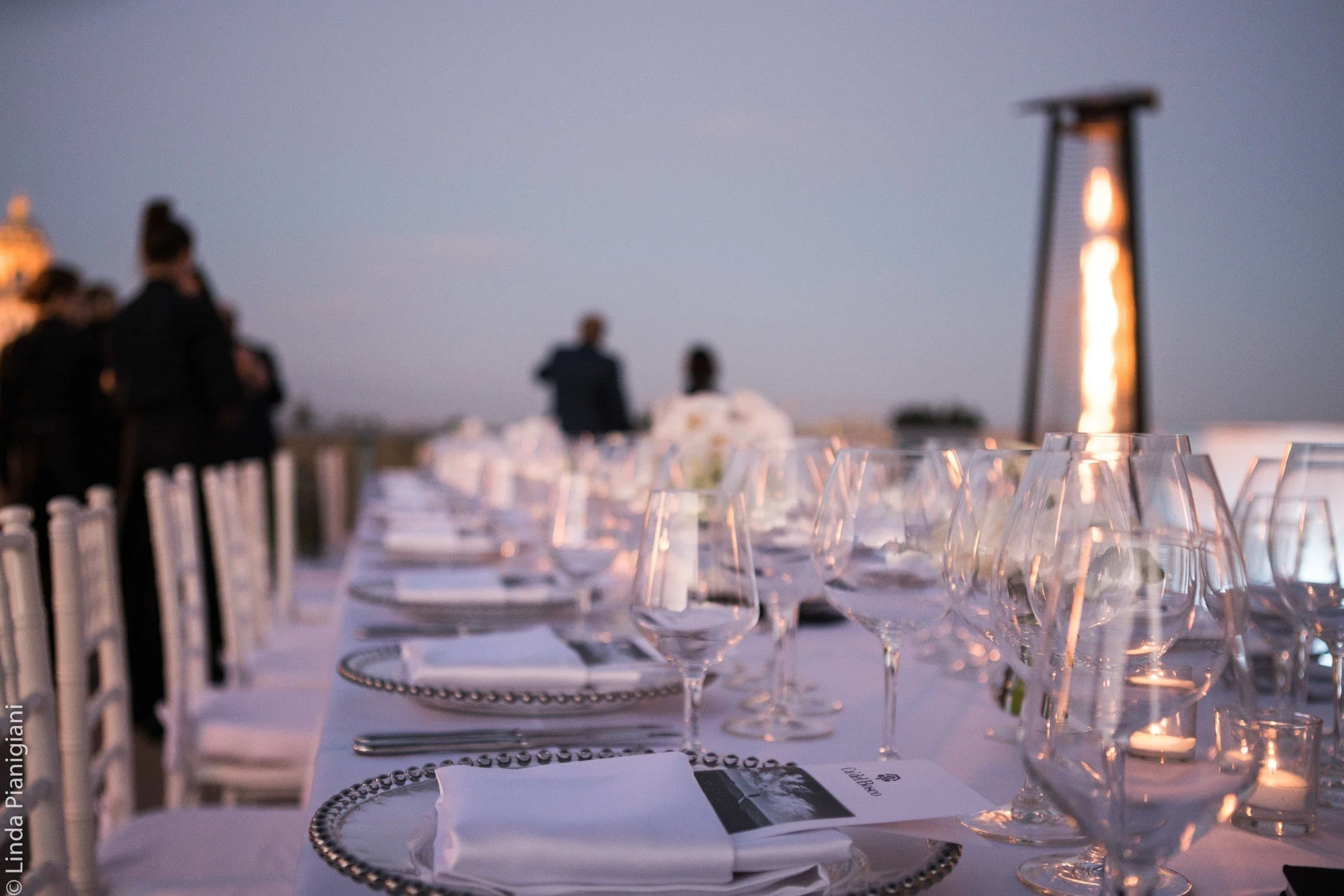
when certain foods are served, whether particular ingredients are welcome or avoided, how beverages are handled, and how service staff interact with guests. Getting these details right signals respect, and respect is the entire point of a diplomatic gathering.
Creating a Menu for an International Guest List
A menu for an international audience is built for breadth and care. It anticipates a wide range of needs and ensures every guest has beautifully prepared options, not a lesser afterthought. In practice, that typically means planning for:
Vegetarian and vegan options as fully realized dishes
Religious and cultural dietary requirements, confirmed and prepared with appropriate care
Rigorous allergen management and clear ingredient communication
Thoughtful handling of alcohol based on the event's cultural context
Clear, respectful menu labeling so guests can choose with confidence
Custom menu development that accounts for all of this, verified with the client in advance, is what allows a diverse room to feel uniformly well cared for.

Matching Service Style to the Occasion
The level of formality drives the service format. A seated state dinner calls for synchronized plated service; a large reception may center on passed hors d'oeuvres and elegant stations; many events blend the two. The right choice depends on the program, the guest count, and the degree of ceremony.
Formal service also has to account for hierarchy and sequence, seating plans, orders of service, and ceremonial moments can all influence when and how courses are delivered. Experienced captains build the service timeline around these elements so the hospitality reinforces the formality of the evening rather than cutting across it.
Working Within Controlled Event Environments
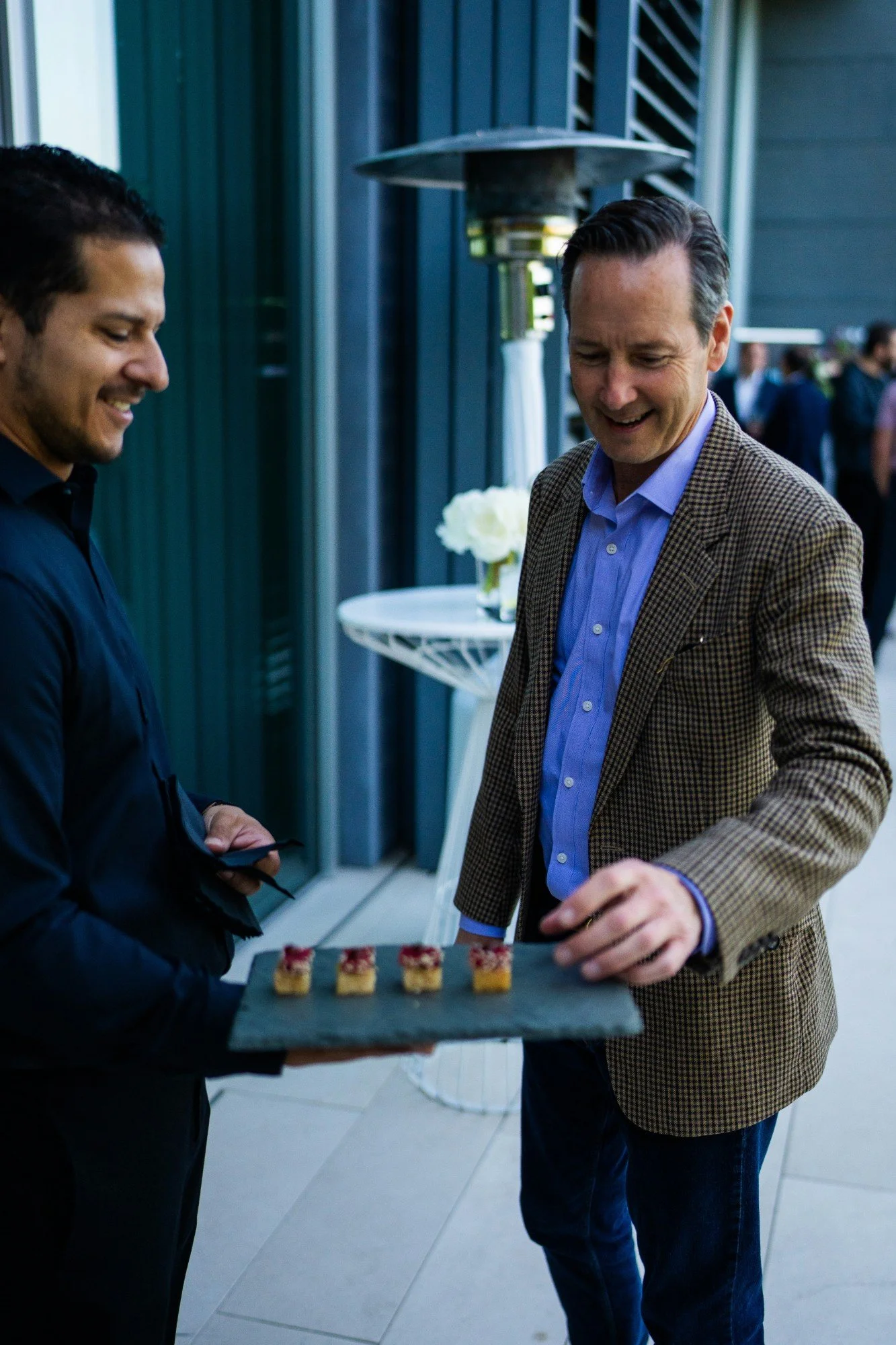
Large diplomatic and corporate events often take place within controlled settings, and the catering team is one of many vendors that must operate inside those parameters. At a general level, that means providing staff credentials in advance, adhering to designated delivery and load-in windows, respecting restricted areas, and coordinating closely with the venue and the client's security team.
The professional standard is simple: the catering operation fits seamlessly into the event's security framework without friction and without ever being the reason a protocol is questioned. Specific procedures stay between the caterer, the venue, and the client, which is exactly as it should be.
Protecting Privacy and Client Confidence
Discretion is as important as anything on the plate. Staff working these events are briefed on confidentiality: professional conduct at all times, adherence to any photography restrictions, and a firm policy against discussing guests or event details, including on social media. What happens at the event stays private.
This culture of discretion is part of why organizations return to a trusted caterer. Knowing that a hospitality team will protect guest privacy and client confidence, without being reminded, is a form of reliability that formal clients value highly.
Structuring a Team for a Large Formal Event
A flawless large event is the product of a well-organized workforce, not simply a big one. A formal reception typically brings together several coordinated roles:
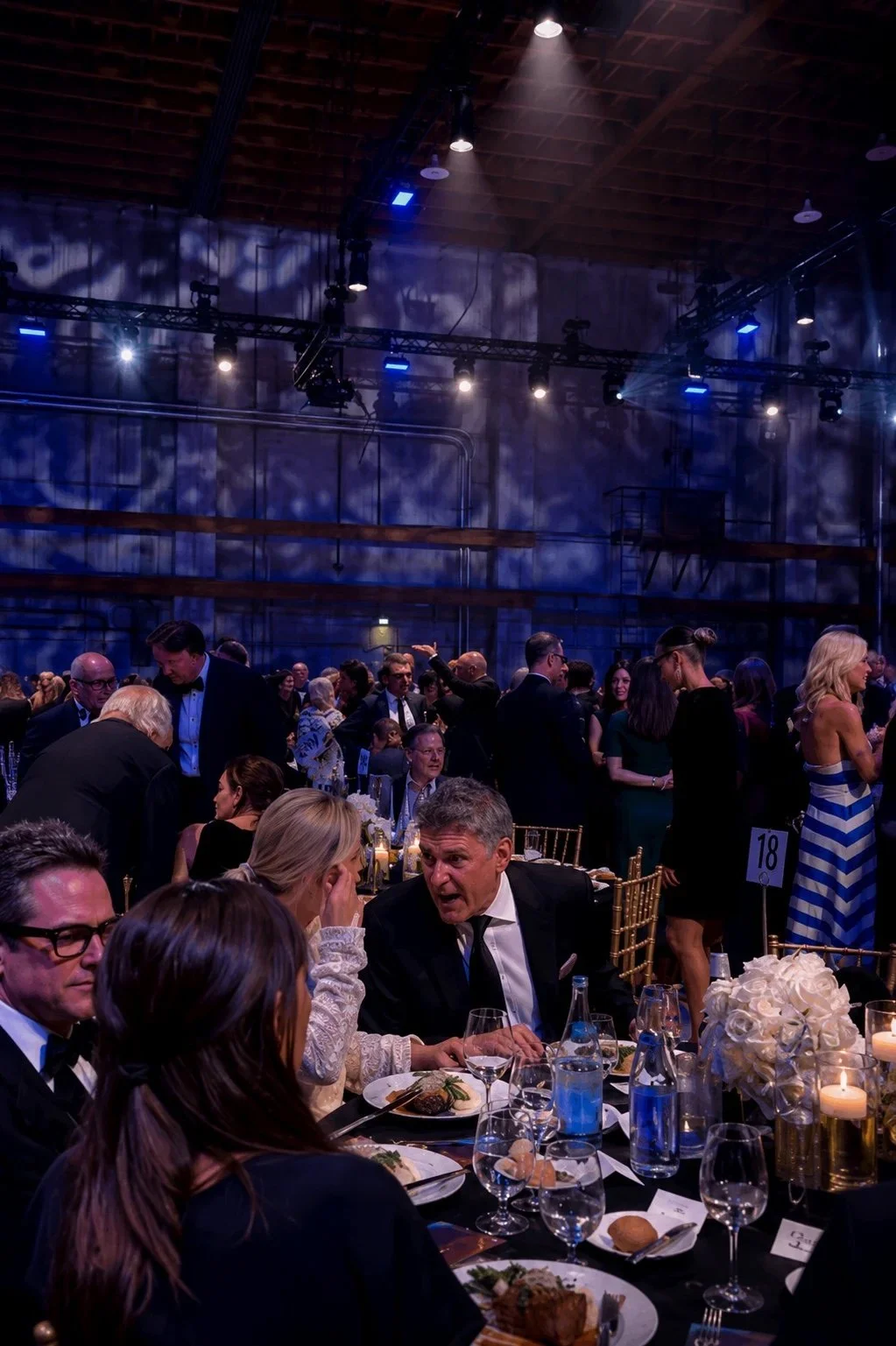
Culinary leadership and kitchen staff producing and finishing food to a consistent standard at scale
Captains directing the floor, managing timing, and liaising with the client and venue
Servers delivering synchronized service and attending to guests with formality
Bartenders managing beverage service within the event's guidelines
Runners, bussers, and logistics staff keeping the operation fluid and the room immaculate
Event managers overseeing the whole and adapting in real time
Thorough pre-event briefings and clear role definition are what let a large team perform as a single, calm unit. This is the same operational discipline Crateful brings to corporate event catering of every size.
Serving Around Speeches, Delegations, and Formal Moments
Protocol shapes the rhythm of service. Receiving lines, anthems, remarks, presentations, and formal introductions all require the catering team to pause, adjust, or accelerate. Service should never interrupt a speech or a ceremonial moment, and it should resume smoothly the instant the program allows.
Achieving that requires reviewing the run-of-show in advance and maintaining constant communication between captains and the event's organizers. When the program shifts, as formal programs often do, the team absorbs the change invisibly, keeping the room's focus where it belongs.
Serving a Multicultural Audience With Care
Guest experience at an international event rests on attentive, respectful service. That means staff who communicate menu details clearly, handle dietary needs with discretion, and adapt gracefully to different dining customs. Small courtesies, an accurate description of a dish, a quiet accommodation, a warm and professional manner, add up to guests feeling genuinely respected.
The measure of success is a room where every guest, regardless of background or dietary need, feels the event was planned with them in mind.
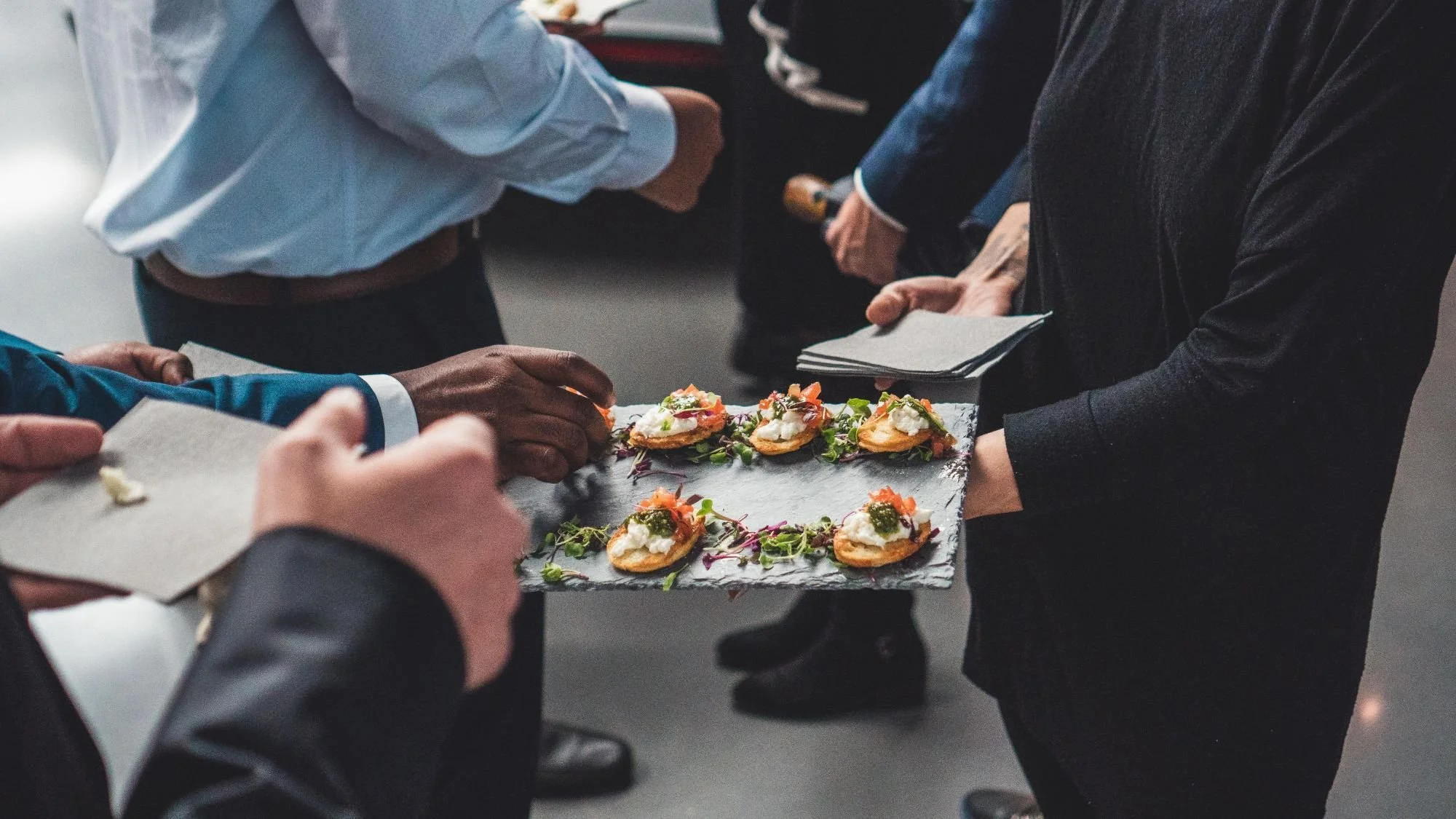
What Happens Behind the Scenes
The composure guests see is produced by a highly organized back-of-house. For a large formal event, that generally includes carefully sequenced load-in, prep kitchens or staging areas, precise food holding, planned service routes, thoughtful station placement, rentals coordination, and a clear breakdown plan. Contingency planning runs through all of it, because at this scale, a backup for the backup is standard practice.
Guests never witness any of this, and that invisibility is the goal. The behind-the-scenes systems are what make the front-of-house experience feel effortless and secure.
Managing Complexity Without Affecting the Room
Large events change in real time: guest counts move, programs run long, access windows shift, menus adjust. What distinguishes an experienced caterer is the depth and leadership to manage that complexity without any of it reaching the guests. Flexible planning and a seasoned team turn potential disruptions into quiet adjustments handled out of view.
What Corporate and Diplomatic Planners Should Prioritize
The principles that carry a diplomatic reception apply to any large formal event:
Start early and communicate fully. Share the program, guest profile, and cultural considerations well in advance.
Research the cultural context together. Collaborate with your caterer rather than leaving assumptions unspoken.
Confirm dietary needs precisely. Verify religious, allergen, and preference requirements early and in writing.
Coordinate security and access ahead of time. Provide staff lists and align on delivery windows and restricted areas.
Invest in staffing depth and leadership. Strong captains and trained teams are what make formal service look effortless.
Build in contingencies. For programs and guest counts that can shift, a plan B protects the experience.
Experience That Extends Beyond a Single Reception
The ability to run a formal international reception reflects a broader operational maturity rather than a one-time feat. A caterer that treats food, service, staffing, logistics, and discretion as one connected craft, an approach reflected in Crateful's own account of building a high-end hospitality brand, can bring the same care to corporate galas, formal dinners, and complex large-scale events across Los Angeles.
Corporate and Diplomatic Event Catering FAQs
What does corporate catering for large events include?
It typically covers menu development, culinary production, staffing, setup, beverage service, rentals, guest service, event coordination, and breakdown. For formal events, it also includes protocol-aware service timing and close coordination with the venue.
How is diplomatic event catering different from standard corporate catering?
Diplomatic events add cultural awareness, formal protocol, heightened privacy and security coordination, international dietary needs, and more structured service timing. The expectations for discretion and precision are significantly higher.
Can a caterer accommodate international and religious dietary requirements?
Yes, with advance guidance. Experienced teams plan for vegetarian, vegan, allergen-conscious, and religious or culturally specific requirements, confirming the details with the client so every guest is thoughtfully served.
How does a caterer coordinate with security teams?
At a general level, by providing staff credentials in advance, following designated delivery and access windows, respecting restricted areas, and working within the venue's and client's procedures. Specifics remain confidential.
How far in advance should a large corporate or diplomatic event be booked?
Book early, especially for large guest counts, formal programs, and complex venues. Early planning allows time for cultural research, menu development, staffing, and rehearsals.
Plan Your Next Large Event
Planning a diplomatic reception, formal corporate dinner, or large international event? Crateful brings thoughtful menu planning, trained staffing, polished service, dietary coordination, and detailed logistics together under one experienced hospitality team. Talk with our large event catering team to discuss your guest count, venue, service format, cultural considerations, and event goals.